A lateral-line break usually leaks only while its zone runs and often causes weak downstream heads, bubbling soil, a spreading soft patch, or one unusually green strip. A leak that continues with every zone off may be on the pressurized irrigation mainline and deserves faster isolation.
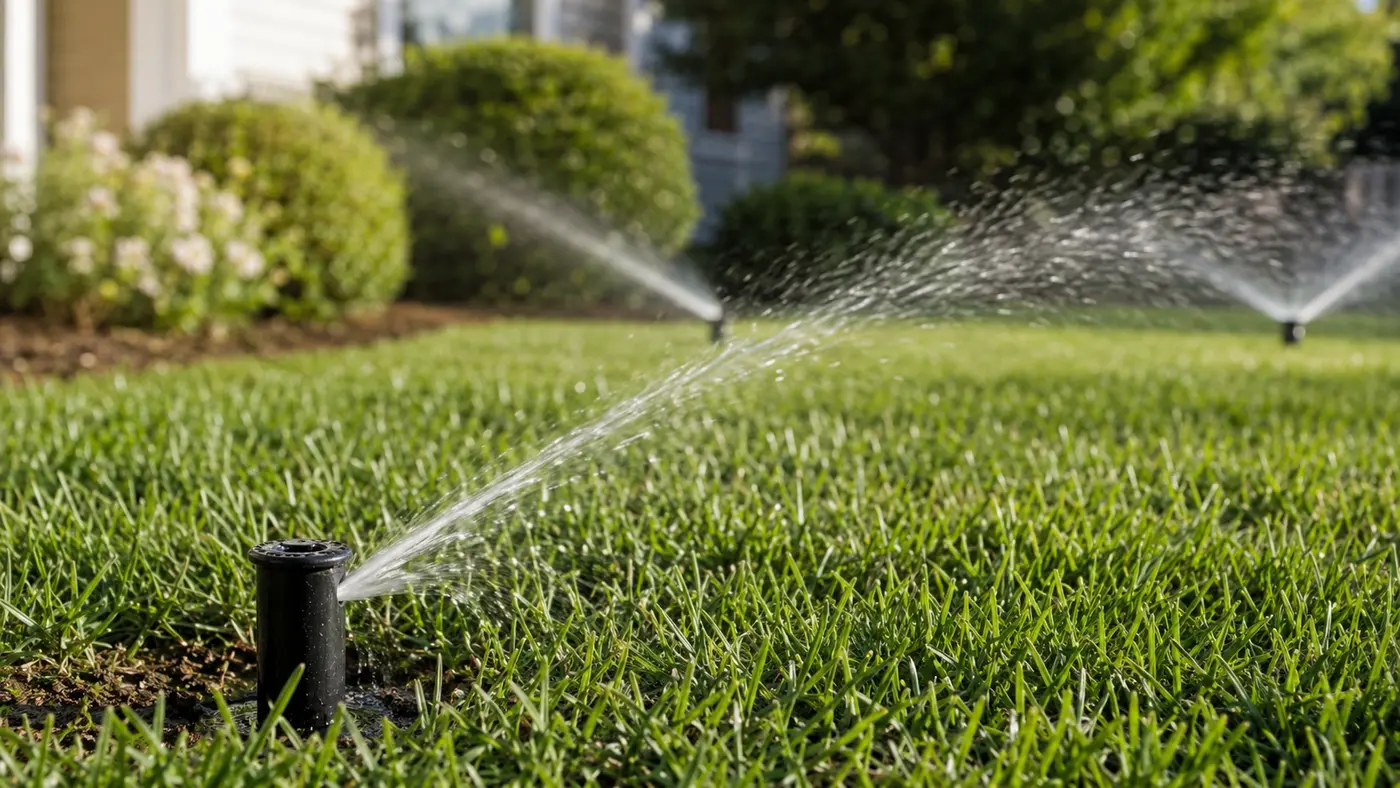
Match the pattern before opening anything
| Possible cause | Best clue | First check |
|---|---|---|
| Broken lateral pipe or fitting | Wet area appears only during one zone | Run that zone briefly and mark the edges |
| Pressurized mainline leak | Water continues with all zones off | Isolate the known irrigation supply |
| Failed head connection | Bubbling centers on one sprinkler body | Inspect the riser or swing joint |
| Drainage or groundwater | Wetness follows rain rather than irrigation | Compare after dry weather with system off |
Read the system before replacing a part
Use the observation that most closely matches your yard. Each row changes the next test, so you do not spend an afternoon proving the wrong theory.
What it meansA downstream lateral pipe or fitting on that zone is likely.
Do nextRun it briefly and map the first bubbling or soft boundary.
What it meansA mainline leak, valve seep, groundwater, or non-irrigation source is possible.
Do nextUse the known irrigation shutoff to compare safely.
What it meansA break or restriction may lie near the performance transition.
Do nextSearch the narrow band between the last normal and first weak head.
What it meansRecent ground disturbance raises the probability of localized pipe damage.
Do nextOverlay the work area with the wet/weak pattern.
Four tests that narrow the fault
Stop as soon as one result gives you a clear boundary. The goal is not to perform every test; it is to eliminate whole groups of causes safely.
- 01
Build a zone-by-zone wet map
Start with dry soil and run each suspect zone briefly, one at a time.
IF YES / NORMALOnly one station recreates the wet patch, identifying its lateral system.
IF NO / ABNORMALWater with all zones off requires mainline or external-source isolation.
- 02
Map hydraulic performance
Flag normal, weak, and non-rising heads in order.
IF YES / NORMALA clear transition creates a focused excavation boundary.
IF NO / ABNORMALUniform weakness may be a valve restriction or zone overload instead.
- 03
Compare the irrigation shutoff
Close only a positively identified irrigation shutoff and observe the wet point.
IF YES / NORMALStopping refill supports a pressurized irrigation source.
IF NO / ABNORMALPersistent water may be trapped drainage, groundwater, or another utility.
- 04
Measure rather than wait for a swamp
Photograph the wet edge at fixed intervals during one short test; stop before runoff spreads.
IF YES / NORMALAn expanding boundary documents an active leak direction.
IF NO / ABNORMALNo change suggests residual moisture or a very small/deep leak requiring professional locating.
Common fixes that waste time
It wastes water, enlarges damage, and blurs the original source.
Water follows soil and slope; use the first wet point and head-performance transition.
Appliances, toilets, and irrigation can create misleading movement.
How the evidence changes the repair
Three far-end heads became weak after a new fence was installed.
- The first five heads remained normal.
- Soil began bubbling beside one new post only during that zone.
- The wet boundary expanded toward the weak group.
Timing, the head-performance break, and recent disturbance converged on one small area. Focused excavation found a split lateral elbow instead of requiring a full-route trench.
How to confirm the repair actually held
A single successful start can hide an intermittent splice, sticky valve, remaining leak, or scheduling problem. Recreate the original conditions before calling the job finished.
Pass: No bubbling soil or expanding wet boundary returns.
If not: The repair is incomplete or a second break exists.
Pass: Downstream heads rise and throw normally.
If not: A restriction, second leak, or overloaded zone remains.
Pass: The fitting stays dry through multiple starts and stops.
If not: Depressurize and correct alignment or joint preparation.
Check these in order
- 01
Determine when water appears
Observe with the controller off, then during a short test of the suspected zone. Timing separates a lateral leak from a continuously pressurized mainline or a non-irrigation water source.
- 02
Map the pressure pattern
Weak heads downstream of the wet area support a lateral break. Normal heads with one local geyser suggest a broken riser or head connection.
- 03
Mark, do not immediately dig
Flag the first bubbling point and the boundary of soft soil. Water travels through trenches, so the lowest wet point may not be directly above the break.
- 04
Check the irrigation meter signal
If the property has a dedicated irrigation meter, movement with every zone off can support a pressurized leak. Make sure no other irrigation device is using water during the observation.
- 05
Clear utilities before excavation
Call 811 in the United States before deeper digging and follow local requirements. Hand excavation around marked utilities still requires care.
- Water continues with all zones off or approaches a foundation.
- The suspected break is under hardscape, near utilities, or on a mainline.
- The pipe route and valve isolation cannot be identified.
What homeowners ask about this symptom
Can a broken sprinkler pipe raise the water bill?
Yes. A pressurized mainline leak can waste water continuously, while a lateral break wastes water whenever its zone runs. The amount depends on pressure, break size, and schedule.
Is the wettest spot always directly above the break?
No. Water can follow a pipe trench, root channel, or slope before surfacing. Use the first bubbling point, pressure pattern, and pipe route together.
Sources and review notes
General maintenance logic is checked against EPA WaterSense outdoor irrigation guidance. Product controls and disassembly steps vary by model; use the current manufacturer manual for your exact valve, controller, or sprinkler head.
Published and last reviewed: August 28, 2026