A low head that drains briefly after watering may be releasing water left in the lateral pipe. Flow that continues for a long time—or several heads on one zone that keep seeping—usually points to a zone valve that is not sealing.
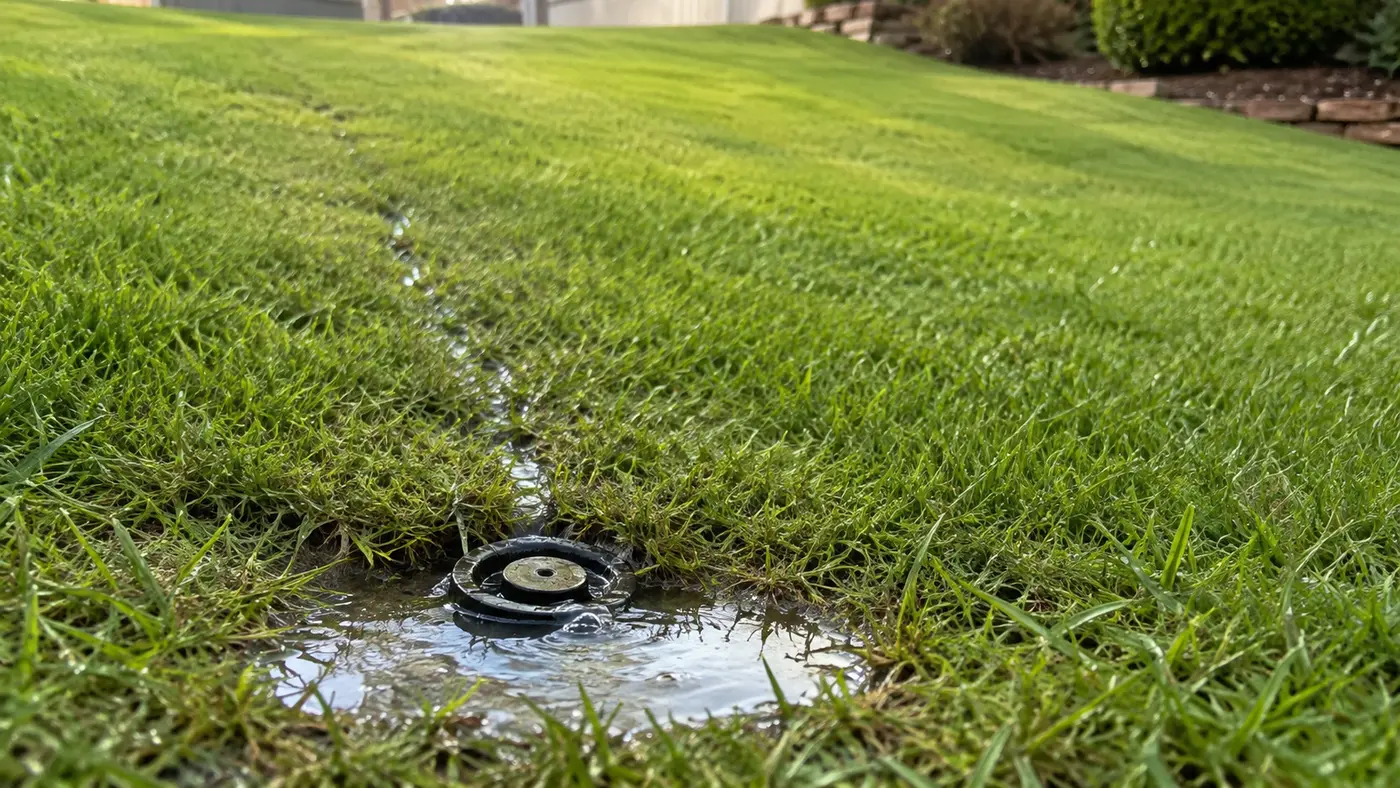
Match the pattern before opening anything
| Possible cause | Best clue | First check |
|---|---|---|
| Low-head drainage | Lowest head drips briefly, then stops | Time how long drainage lasts |
| Weeping zone valve | Several heads seep long after shutdown | Shut off irrigation water and compare |
| Mainline leak | Wet area remains with controller off | Observe with irrigation supply isolated |
| Damaged head or riser | Leak appears only while the zone runs | Expose and inspect the head connection |
Read the system before replacing a part
Use the observation that most closely matches your yard. Each row changes the next test, so you do not spend an afternoon proving the wrong theory.
What it meansWater stored in the lateral pipe is draining by gravity.
Do nextTime it to a complete stop before replacing anything.
What it meansThe zone valve is probably passing fresh water.
Do nextClose the dedicated irrigation supply and see whether seepage stops.
What it meansResidual pipe water is no longer a sufficient explanation.
Do nextInspect the zone valve for debris, diaphragm damage, or an open bleed.
What it meansThis is an operating leak at the head, riser, or fitting—not off-cycle drainage.
Do nextExpose the connection only after shutting the zone down.
What resolved repairs add to this diagnosis
We matched 18 of the 100 reviewed outcomes to this symptom family. This is a convenience sample, not a universal failure-rate estimate, but every included case reports what restored operation.
The visible head was often only the outlet where an upstream valve problem appeared. Matching repairs frequently involved valve debris, diaphragm or top assemblies, incorrectly seated parts, or a solenoid left mechanically open.
Time the leak and count the affected heads. A tapering leak at the lowest head supports drainage; steady flow or several leaking heads on one zone makes a passing valve much more likely.
Cleaning the head did not help; replacing that head stopped the leak in the homeowner's reported case.
C21 · reported resolutionA Hunter PGV valve would not close completelyReplacing the diaphragm stopped the persistent flow, although the homeowner noted this valve had needed the same repair before.
C54 · reported resolutionSeveral heads wept after their zones shut downA homeowner rebuilt six valve tops and internal assemblies while leaving the buried bodies in place; the weeping stopped.
C82 · reported resolutionHeads continued flowing after the controller stoppedTightening manually opened solenoids and cleaning debris from two of three valves stopped the unwanted flow.
Four tests that narrow the fault
Stop as soon as one result gives you a clear boundary. The goal is not to perform every test; it is to eliminate whole groups of causes safely.
- 01
Mark and time the leak
Dry the area, place a flag, note shutdown time, and photograph the flow at 0, 15, and 60 minutes.
IF YES / NORMALA visibly tapering leak that stops supports low-head drainage.
IF NO / ABNORMALSteady flow after the lateral should have emptied supports a leaking valve.
- 02
Count every leaking head
Walk the whole zone after shutdown, including heads hidden by grass.
IF YES / NORMALOne low-elevation outlet favors drainage.
IF NO / ABNORMALMultiple outlets on the same zone make valve seepage more likely.
- 03
Isolate irrigation water
Close only the known irrigation shutoff; do not operate an unfamiliar backflow assembly as a substitute.
IF YES / NORMALIf seepage stops, the active irrigation supply is feeding it.
IF NO / ABNORMALWater that remains may be trapped drainage or a non-irrigation source.
- 04
Inspect the valve only after diagnosis
Depressurize, document orientation, and inspect the diaphragm seat, spring, bleed screw, and solenoid seal per the exact valve manual.
IF YES / NORMALDebris or a damaged sealing surface explains continuous seepage.
IF NO / ABNORMALA clean valve shifts attention to the wrong valve identification, mainline, or another water source.
Common fixes that waste time
It may hide water at one outlet while the faulty zone valve keeps leaking.
The lowest head is often only where upstream water becomes visible.
Sloped zones can release a meaningful volume of stored water before stopping.
How the evidence changes the repair
One downhill head formed a puddle after every evening cycle.
- Flow was strongest at shutdown, weakened after 20 minutes, and stopped before the next morning.
- No other head leaked.
- Closing the irrigation supply did not change the already-tapering flow.
The time curve and elevation supported low-head drainage, not a continuously fed valve leak. A head with an approved check valve addressed the symptom; opening the zone valve would have added risk without evidence.
How to confirm the repair actually held
A single successful start can hide an intermittent splice, sticky valve, remaining leak, or scheduling problem. Recreate the original conditions before calling the job finished.
Pass: A valve repair produces no continuing seep; a drainage fix stops the downhill discharge.
If not: The wrong zone valve, a damaged seat, or another low outlet remains involved.
Pass: Water has not simply moved to the next-lowest outlet.
If not: A check valve changed the exit point without correcting an upstream valve leak.
Pass: The result holds under the normal program duration and closing sequence.
If not: Longer runtime, slope, or slow valve closure changes the diagnosis.
Check these in order
- 01
Time the leak
After the watering cycle ends, note whether the flow slows and stops. Brief drainage at the lowest elevation differs from a steady valve-fed seep.
- 02
Count affected heads
One lowest head favors drainage. Multiple heads in the same zone favor a valve that cannot seal because of debris, diaphragm damage, or a loose manual bleed.
- 03
Isolate irrigation water
If you know the dedicated irrigation shutoff, close it and observe. A leak that stops supports an irrigation-side fault. Do not operate an unfamiliar backflow assembly as a substitute shutoff.
- 04
Choose the correct repair
Use a check-valve head for recurring low-point drainage. For continuous seepage, service the zone valve rather than repeatedly replacing the lowest head.
- Water continues near the foundation or a paved surface.
- The irrigation shutoff cannot be identified.
- The valve must be rebuilt and its exact model is unknown.
What homeowners ask about this symptom
How long can low-head drainage last?
It should slow and stop after the residual water in the lateral pipe drains. The duration varies with pipe volume and slope; steady flow that does not taper suggests a valve that is passing water.
Will replacing the lowest head stop a valve leak?
No. A check-valve head can control residual drainage, but continuous water leaking through a zone valve must be corrected at the valve.
Sources and review notes
General maintenance logic is checked against EPA WaterSense outdoor irrigation guidance. Product controls and disassembly steps vary by model; use the current manufacturer manual for your exact valve, controller, or sprinkler head.
Published and last reviewed: August 30, 2026