A clicking solenoid suggests that an electrical command reaches the valve, but it does not prove the valve has opened. A closed supply, closed flow control, clogged internal port, stuck diaphragm, weak solenoid, or missing master-valve flow can still leave the zone dry.
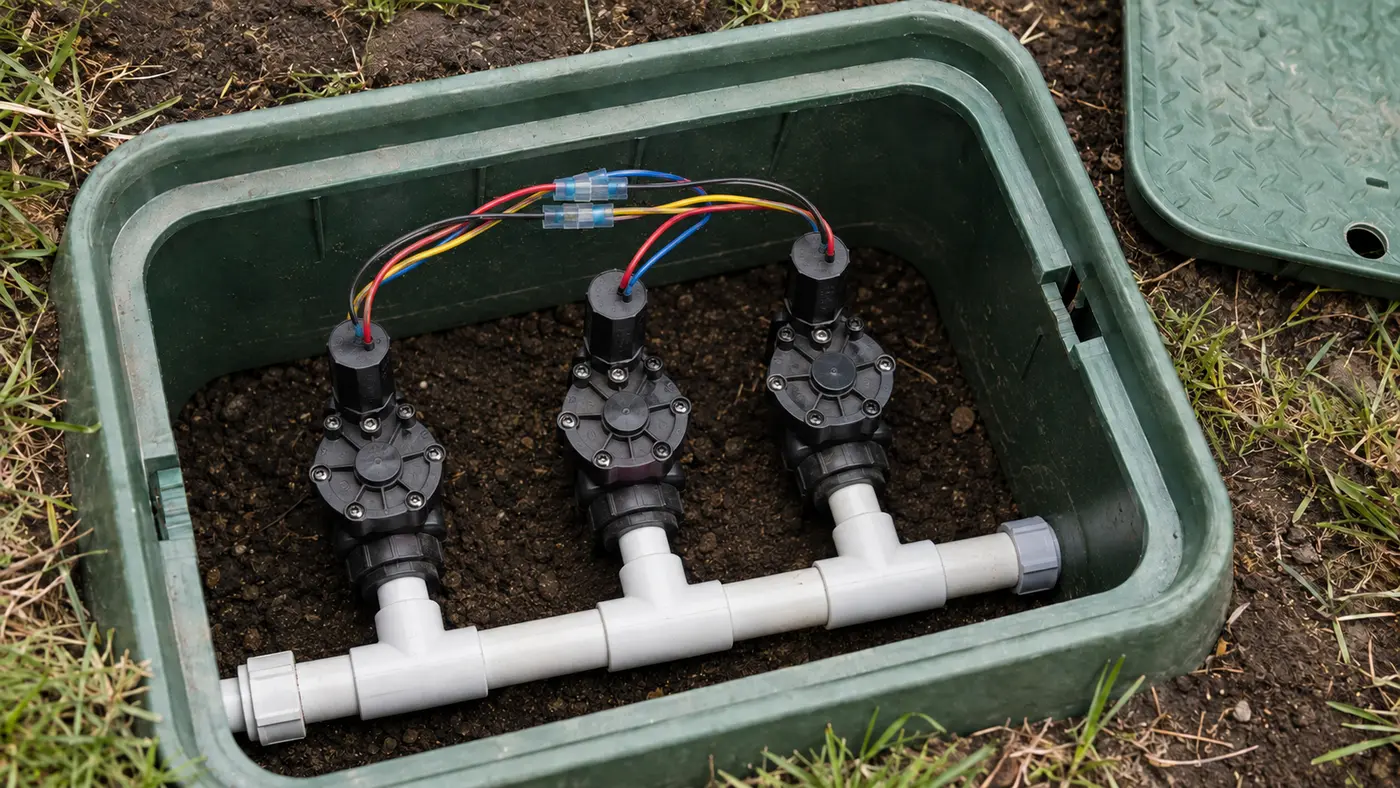
Match the pattern before opening anything
| Possible cause | Best clue | First check |
|---|---|---|
| Water supply or flow control closed | Valve clicks with no water noise | Verify the known supply and flow-control position |
| Clogged exhaust port | Valve opens after using the bleed screw | Service only with water off and model instructions |
| Stuck or damaged diaphragm | Valve receives a command but never develops flow | Inspect matched internal parts |
| Master valve not opening | Several zone valves click but stay dry | Check whether a P/MV circuit is present |
Read the system before replacing a part
Use the observation that most closely matches your yard. Each row changes the next test, so you do not spend an afternoon proving the wrong theory.
What it meansWater supply and diaphragm movement are possible, but the electrical pilot path may be restricted.
Do nextInspect the solenoid and exhaust port for the exact valve model.
What it meansThe click is secondary; water supply, flow control, or internal blockage comes first.
Do nextVerify supply and valve ports.
What it meansController and field wiring delivered a command.
Do nextFocus on solenoid lift, pilot ports, diaphragm, and flow control.
What it meansThe sound may not be the zone solenoid at all.
Do nextListen at the identified valve box and confirm the correct valve.
What resolved repairs add to this diagnosis
We matched 12 of the 100 reviewed outcomes to this symptom family. This is a convenience sample, not a universal failure-rate estimate, but every included case reports what restored operation.
A click was not a pass/fail verdict for the solenoid. Matching outcomes included a shorted or weak coil, malformed solenoid passage, controller fault, incorrect flow-control position, stuck diaphragm, and complete valve failure.
After hearing the click, try the approved manual bleed. Water from the bleed proves supply and downstream flow, shifting attention to the pilot passage, diaphragm control chamber, solenoid force, and loaded voltage.
Returning the valve's flow-control stem from fully open to a reasonable setting stopped the noise and restored flow.
C44 · reported resolutionA solenoid clicked but the valve needed bleed-screw help to pass waterA swap test implicated both solenoid and valve internals; replacing the inexpensive complete valve restored reliable opening.
C57 · reported resolutionA solenoid clicked but the associated zone did not operateA user with the same controller and symptom reported that replacing the controller resolved it after solenoid and voltage checks.
C77 · reported resolutionA valve clicked electrically but would not pass waterInspection found a malformed, partly blocked solenoid air passage; replacing that component restored opening.
Four tests that narrow the fault
Stop as soon as one result gives you a clear boundary. The goal is not to perform every test; it is to eliminate whole groups of causes safely.
- 01
Locate the sound
Have one person start the zone while another listens at the correct valve box.
IF YES / NORMALThe click is physically at the zone valve.
IF NO / ABNORMALA cabinet relay click does not prove solenoid movement in the yard.
- 02
Use the bleed screw
Open only as the valve manual permits; include the master valve if required.
IF YES / NORMALNormal flow proves water and diaphragm path are available.
IF NO / ABNORMALCheck supply, flow control, blocked ports, and valve internals.
- 03
Measure under load
Check AC voltage across the solenoid conductors while the station is active.
IF YES / NORMAL24–28 VAC with no opening points to solenoid or valve pilot path.
IF NO / ABNORMALA weak or missing voltage moves diagnosis back to cable, splice, or common.
- 04
Inspect the pilot path
After shutting off water and power, follow the model instructions to inspect solenoid plunger and small exhaust ports.
IF YES / NORMALRemoving debris restores opening on retest.
IF NO / ABNORMALA damaged coil, plunger, diaphragm, or seat needs the exact replacement part.
Common fixes that waste time
A plunger can move without opening the pilot path or without adequate voltage under load.
Changing the calibrated passage can prevent correct valve operation.
A correct command may already be arriving in the box.
How the evidence changes the repair
A zone produced a clear click in the valve box but no sprinkler movement.
- The valve opened strongly from the external bleed screw.
- 25.8 VAC reached the solenoid wires.
- The small exhaust passage contained a fragment of debris.
The click and voltage did not prove water could leave the upper valve chamber. Clearing the model-approved pilot passage restored opening; the controller and field wire were good.
How to confirm the repair actually held
A single successful start can hide an intermittent splice, sticky valve, remaining leak, or scheduling problem. Recreate the original conditions before calling the job finished.
Pass: The valve opens fully; the click is now followed by flow.
If not: The pilot path, diaphragm, flow control, or supply remains restricted.
Pass: Both valves open in a similar interval without chatter.
If not: Marginal voltage or incomplete pilot flow may remain.
Pass: The fix survives normal wire position and moisture protection.
If not: A connection may work only while moved or exposed.
Check these in order
- 01
Count how many valves click
One dry clicking valve suggests a local valve fault. Several clicking valves with no water point toward the supply, master valve, pump, or backflow path shared by the system.
- 02
Try the correct manual opening method
Follow the valve manufacturer: usually a small bleed opening or a limited solenoid turn. If the zone runs manually, water is available and the pilot or electrical opening path needs attention.
- 03
Check flow control
Some valves have a flow-control stem that can be turned too far closed. Record its starting position and do not force a seized or unfamiliar control.
- 04
Inspect ports and diaphragm with water off
Debris or excess PVC glue can block small valve passages. Match the valve model, isolate the water, photograph orientation, and keep springs and diaphragm ports in their original positions.
- 05
Do not treat the click as a pass
A coil can move enough to click yet still be weak or unable to relieve the diaphragm chamber. Compare against a known-good matched solenoid only when the manufacturer permits it.
- The master valve, pump, or backflow assembly may be restricting flow.
- The valve body is cracked or buried too deeply to service safely.
- Internal parts cannot be matched to an exact model.
What homeowners ask about this symptom
Does a click mean the sprinkler solenoid is good?
Not conclusively. It proves some movement occurred, but the coil can still be weak and the valve can remain closed because of low voltage, clogged pilot passages, diaphragm trouble, or no water supply.
Why does opening the bleed screw make it work?
The bleed releases pressure from the control chamber hydraulically. If that opens the valve, the main water path is available and the fault is more likely in the pilot port, solenoid action, or electrical command.
Sources and review notes
General maintenance logic is checked against EPA WaterSense outdoor irrigation guidance. Product controls and disassembly steps vary by model; use the current manufacturer manual for your exact valve, controller, or sprinkler head.
Published and last reviewed: August 30, 2026