A faint energized hum can be normal, but loud buzzing with no flow often means the solenoid is energized without opening the valve. Check whether the zone opens manually, then inspect waterproof splices, supply, flow control, coil compatibility, and internal pilot passages.
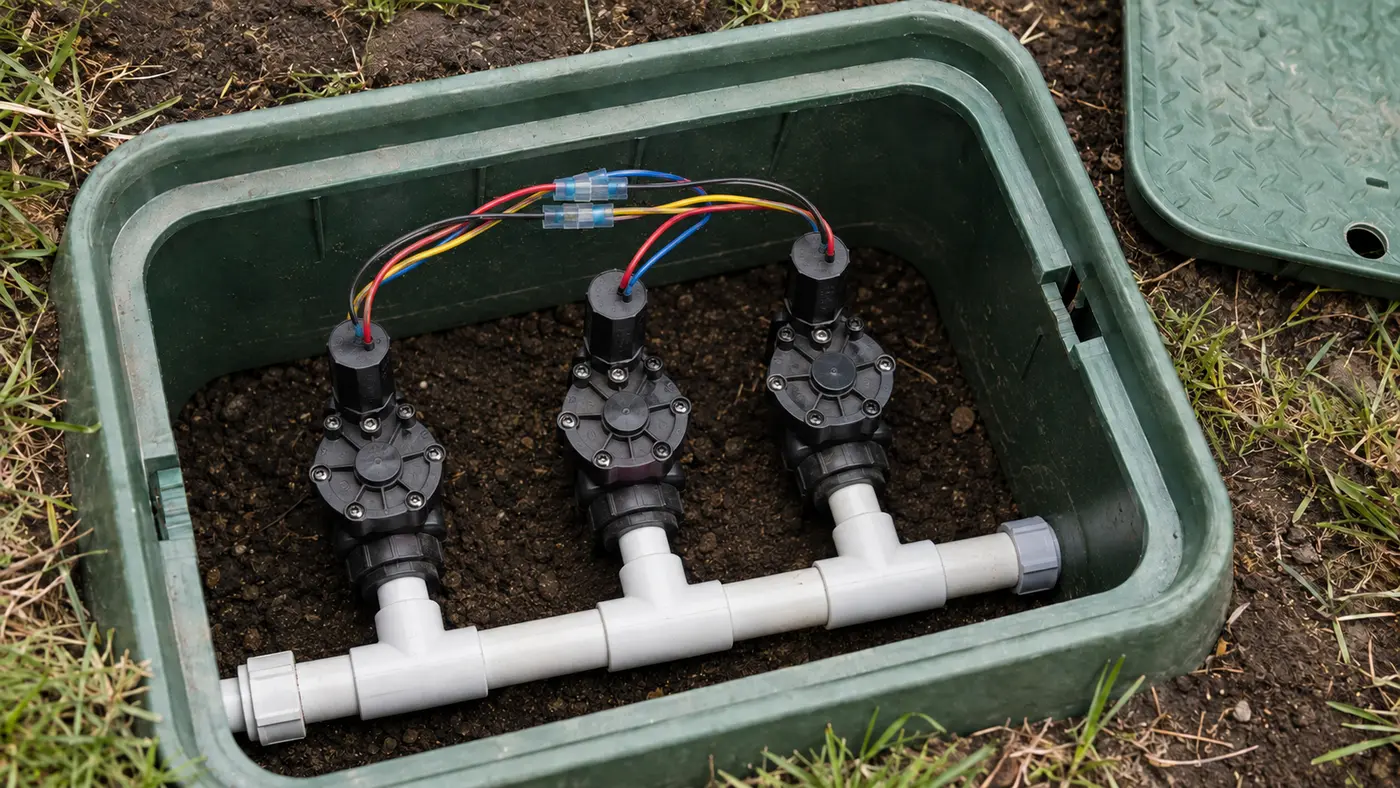
Match the pattern before opening anything
| Possible cause | Best clue | First check |
|---|---|---|
| Low voltage at the valve | Buzz changes or coil chatters | Inspect long wire run and wet splices |
| Wrong or damaged solenoid | Problem began after replacement | Confirm exact model and voltage rating |
| Blocked pilot passage | Manual bleed opens the zone | Service the valve with supply off |
| Closed flow control or supply | No water movement is heard | Verify known valve positions |
Read the system before replacing a part
Use the observation that most closely matches your yard. Each row changes the next test, so you do not spend an afternoon proving the wrong theory.
What it meansThe command arrives, but the solenoid or pilot path cannot complete opening.
Do nextCheck manual response, flow control, plunger, and ports.
What it meansThe coil may chatter because of resistance in wiring or a weak transformer/output.
Do nextCompare voltage at controller and valve under load.
What it meansWater supply and the main diaphragm path can work.
Do nextFocus on the electrical pilot system.
What it meansThe hum is not the main problem.
Do nextCheck supply, flow control, blockage, or damaged internals.
Four tests that narrow the fault
Stop as soon as one result gives you a clear boundary. The goal is not to perform every test; it is to eliminate whole groups of causes safely.
- 01
Measure where the voltage is lost
Compare station-to-COM at the controller with voltage across the solenoid while humming.
IF YES / NORMALSimilar readings near 24–28 VAC point to the valve end.
IF NO / ABNORMALA large drop in the field points to splice, common, or cable resistance.
- 02
Open the valve manually
Use the documented bleed method, not excessive force on the solenoid.
IF YES / NORMALHydraulics work; inspect solenoid and exhaust passage.
IF NO / ABNORMALVerify supply, flow control, and internal blockage first.
- 03
Inspect the coil connection
With power off, examine both waterproof splices for corrosion, loose copper, or mixed common wires.
IF YES / NORMALA repaired connection removes hum and opens the valve.
IF NO / ABNORMALContinue to model-specific solenoid and port inspection.
- 04
Compare with a known-good compatible solenoid
Only if the model permits, isolate the coil or use the manufacturer's specified resistance range.
IF YES / NORMALThe fault follows the solenoid: replace it with the exact compatible part.
IF NO / ABNORMALThe valve body or pilot passages remain suspect.
Numbers worth measuring
Measure during the hum; an unloaded reading can hide a high-resistance connection.
Common fixes that waste time
It can attract debris or damage materials and does not repair low voltage.
Snug is model-dependent; tool force can damage the valve.
Corroded splices can drop voltage only when the coil draws current.
How the evidence changes the repair
The valve hummed loudly but would not open from the controller.
- Controller output measured 26.4 VAC.
- Only 17.2 VAC reached the coil while energized.
- A buried-in-water common splice was dark and brittle.
The under-load voltage comparison exposed resistance that an idle continuity test could miss. A waterproof splice repair restored full voltage and eliminated the hum.
How to confirm the repair actually held
A single successful start can hide an intermittent splice, sticky valve, remaining leak, or scheduling problem. Recreate the original conditions before calling the job finished.
Pass: Voltage remains in the expected range and the hum is gone.
If not: Under-load resistance or a weak output still exists.
Pass: The valve opens consistently without needing a second command.
If not: A marginal coil, plunger, diaphragm, or port remains.
Pass: Connections remain dry and mechanically secure.
If not: Moisture intrusion can recreate the voltage drop; remake the splice correctly.
Check these in order
- 01
Distinguish a hum from chatter
A steady faint sound can occur in an energized AC solenoid. Repeated chatter, heat, or a loud new buzz is not a reason to leave the station running; shut it down and investigate.
- 02
Open the valve manually
If the valve opens by its approved bleed method, the downstream pipe and heads can flow. Focus on the solenoid, wiring voltage, splice quality, and pilot passage.
- 03
Inspect field connections
With controller power off, check for loose copper, ordinary indoor wire nuts, standing water, or green corrosion. Poor connections can pass enough current to hum without operating reliably.
- 04
Confirm the replacement part
Solenoids are not universally interchangeable. Verify the valve family, thread, plunger configuration, and voltage before assuming a newly installed coil is correct.
- 05
Leave electrical measurements to a qualified person
A trained technician can compare controller-terminal voltage with voltage at the valve under load. A large drop points toward cable length, damaged conductor, or bad splices.
- The solenoid becomes hot, smells burned, or chatters repeatedly.
- The cable is damaged underground or several zones show voltage loss.
- The valve is part of a pump or master-valve system.
What homeowners ask about this symptom
Is a humming sprinkler valve dangerous?
A faint hum can be normal while energized, but loud buzzing, chatter, heat, odor, or failure to open warrants shutting the station off and inspecting the electrical and valve path.
Can a wet splice make a valve hum but not open?
Yes. Corrosion or a loose underground connection can create voltage drop under load, leaving the solenoid energized but too weak for reliable operation.
Sources and review notes
General maintenance logic is checked against EPA WaterSense outdoor irrigation guidance. Product controls and disassembly steps vary by model; use the current manufacturer manual for your exact valve, controller, or sprinkler head.
Published and last reviewed: August 28, 2026