First confirm the system was intentionally winterized and identify its irrigation shutoff. Inspect exposed components, restore water slowly with all zones off, then run two unrelated zones manually. If neither works, check shared supply, controller power, common wire, master valve, or pump; if only one fails, stay with that station's wire, solenoid, valve, or lateral pipe.
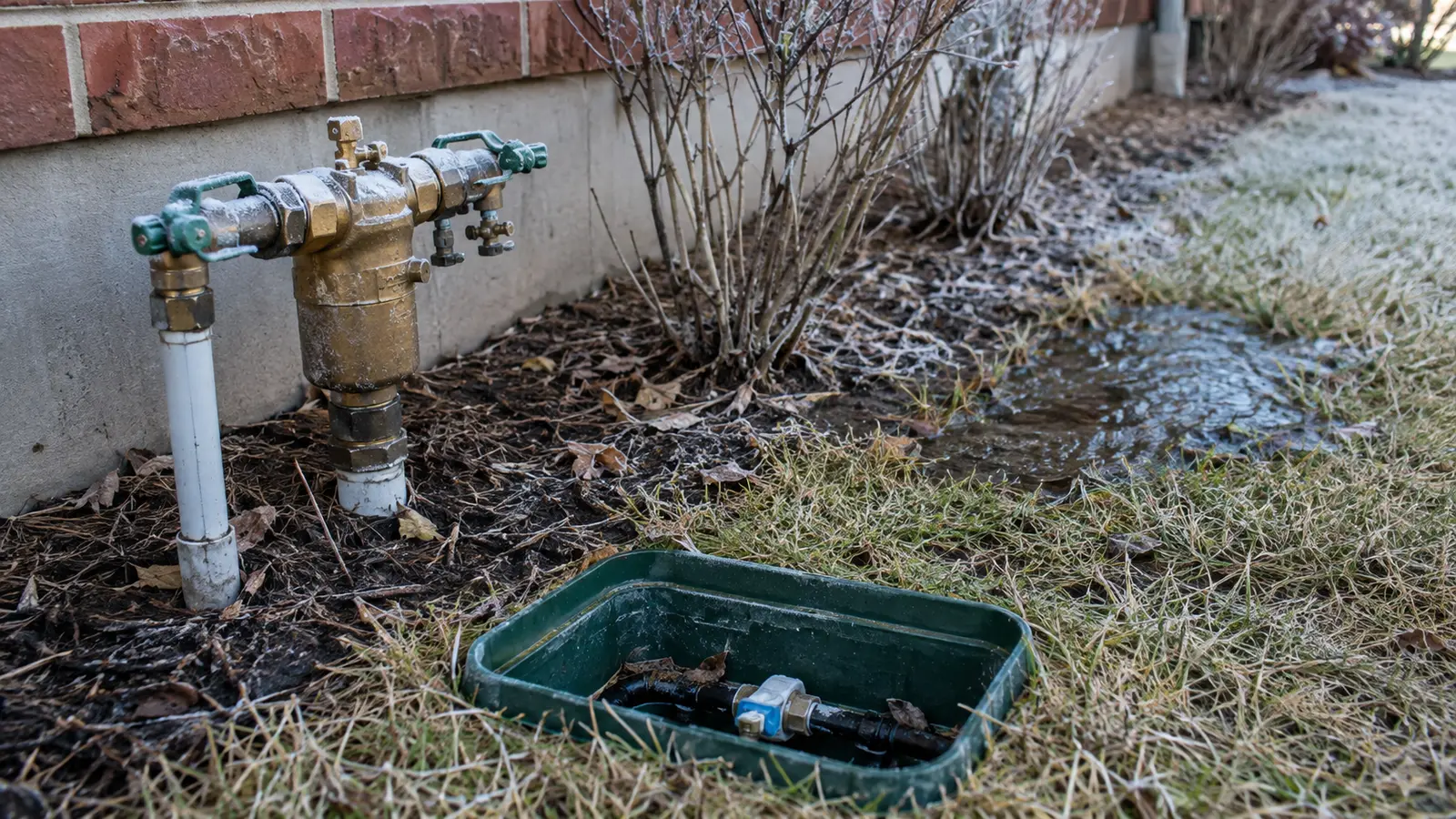
Match the pattern before opening anything
| Possible cause | Best clue | First check |
|---|---|---|
| Irrigation supply remains closed | Every valve is dry and manual opening produces no flow | Identify and slowly open the dedicated irrigation shutoff |
| Controller remains off, delayed, or sensor-blocked | Water is available but automatic schedules do not start | Run one station from manual controller mode |
| Shared common, master valve, or pump fault | Two unrelated zones fail despite a normal display | Inspect COM and P/MV paths before individual solenoids |
| Freeze-related leak | Pressure falls or water appears during startup | Stop water and classify off-state versus zone-only leakage |
Read the system before replacing a part
Use the observation that most closely matches your yard. Each row changes the next test, so you do not spend an afternoon proving the wrong theory.
What it meansThe shared water path is still closed or unavailable.
Do nextVerify the irrigation isolation valve, master valve, pump, and winter shutdown state.
What it meansWater and downstream hydraulics work; the electrical command path does not.
Do nextCheck power, common wire, station output, splices, and solenoids.
What it meansHardware is available; timing logic is blocking automatic watering.
Do nextReview active program, start time, water days, sensor, rain delay, and seasonal adjustment.
What it meansThe startup exposed a local restriction, leak, or damaged head.
Do nextMap head performance and wet soil on that zone only.
Four tests that narrow the fault
Stop as soon as one result gives you a clear boundary. The goal is not to perform every test; it is to eliminate whole groups of causes safely.
- 01
Verify the winter shutdown positions
Use photos, labels, installer notes, or the exact component manual to identify supply and drain controls.
IF YES / NORMALEvery control has a known role before it is moved.
IF NO / ABNORMALDo not guess with a backflow assembly or old valve; obtain system-specific help.
- 02
Restore shared water with stations off
Open the irrigation supply slowly and inspect the exposed path and valve boxes.
IF YES / NORMALPressure stabilizes without visible or meter-indicated leakage.
IF NO / ABNORMALClose water and repair the shared leak before running zones.
- 03
Compare two unrelated stations
Run each from controller manual mode for about one minute.
IF YES / NORMALAt least one works, allowing a local station diagnosis.
IF NO / ABNORMALIdentical failure moves priority to supply, common wire, master valve, pump, or controller power.
- 04
Schedule a near-future test
After manual operation succeeds, create a short start several minutes ahead and observe it without pressing manual start.
IF YES / NORMALAutomatic logic and hardware both operate.
IF NO / ABNORMALThe remaining fault is program, clock, sensor, delay, or weather logic.
Common fixes that waste time
It erases settings without proving water or valve control is available.
A hidden split can flood quickly and the initial source becomes harder to see.
Simultaneous zone failures favor a shared cause.
How the evidence changes the repair
A six-zone system displayed normal time after winter but produced no water.
- Two unrelated manual station runs failed identically.
- Opening either zone valve manually also produced no flow.
- The dedicated irrigation isolation valve was still in its winter closed position.
Two zone failures plus failed manual valve operation moved the boundary upstream of controller wiring. Slowly restoring the known supply solved the issue without resetting programs or replacing solenoids.
How to confirm the repair actually held
A single successful start can hide an intermittent splice, sticky valve, remaining leak, or scheduling problem. Recreate the original conditions before calling the job finished.
Pass: Both produce normal water flow.
If not: A shared startup fault remains.
Pass: Automatic timing and hardware agree.
If not: Programming or sensor logic still blocks operation.
Pass: No seep or delayed pooling appears.
If not: Startup revealed a leak that needs isolation.
Check these in order
- 01
Reconstruct last fall's shutdown
Determine whether the system was blown out, gravity-drained, or merely turned off. Do not assume every open-looking valve was left in its operating position.
- 02
Inspect the exposed path
Check the backflow assembly, above-ground pipe, filter housings, valve boxes, and visible wiring before pressurizing. Replace missing caps or obviously split components first.
- 03
Restore pressure slowly
Keep controller stations off and slowly open the known supply. Pause and listen. Rapid pressurization can turn a small split into a larger leak and makes the first wet point harder to identify.
- 04
Compare two manual station runs
Run two unrelated zones for about one minute. One failure is local; identical failure of both raises shared supply, common wire, master valve, pump, or controller output.
- 05
Separate manual from automatic operation
After hardware works, schedule a short start a few minutes ahead. A manual run that succeeds while the scheduled run fails is a programming, sensor, delay, or clock problem.
- The startup exposes a pressurized leak or cracked backflow component.
- The system uses a pump, lake supply, or unfamiliar master-valve arrangement.
- Live electrical testing or buried wire locating is required.
What homeowners ask about this symptom
Why does the controller run but no sprinklers start after winter?
The display can count down while the irrigation supply remains closed, a master valve or pump fails, the common wire is open, or a station circuit cannot energize its valve.
Should every valve be opened at once during spring startup?
No. Restore the shared supply with stations off, observe for leaks, then test zones one at a time so the first failure has a clear boundary.
Sources and review notes
General maintenance logic is checked against EPA WaterSense outdoor irrigation guidance. Product controls and disassembly steps vary by model; use the current manufacturer manual for your exact valve, controller, or sprinkler head.
Published and last reviewed: August 30, 2026