Schedule winterization before your first meaningful freeze risk, with enough lead time to get service if needed. Give the earliest priority to exposed backflow preventers, above-ground pipe, pumps, filters, and shallow transitions. A brief 32°F forecast and a prolonged colder event are not the same risk, but a generic temperature promise cannot guarantee that trapped water will remain safe.
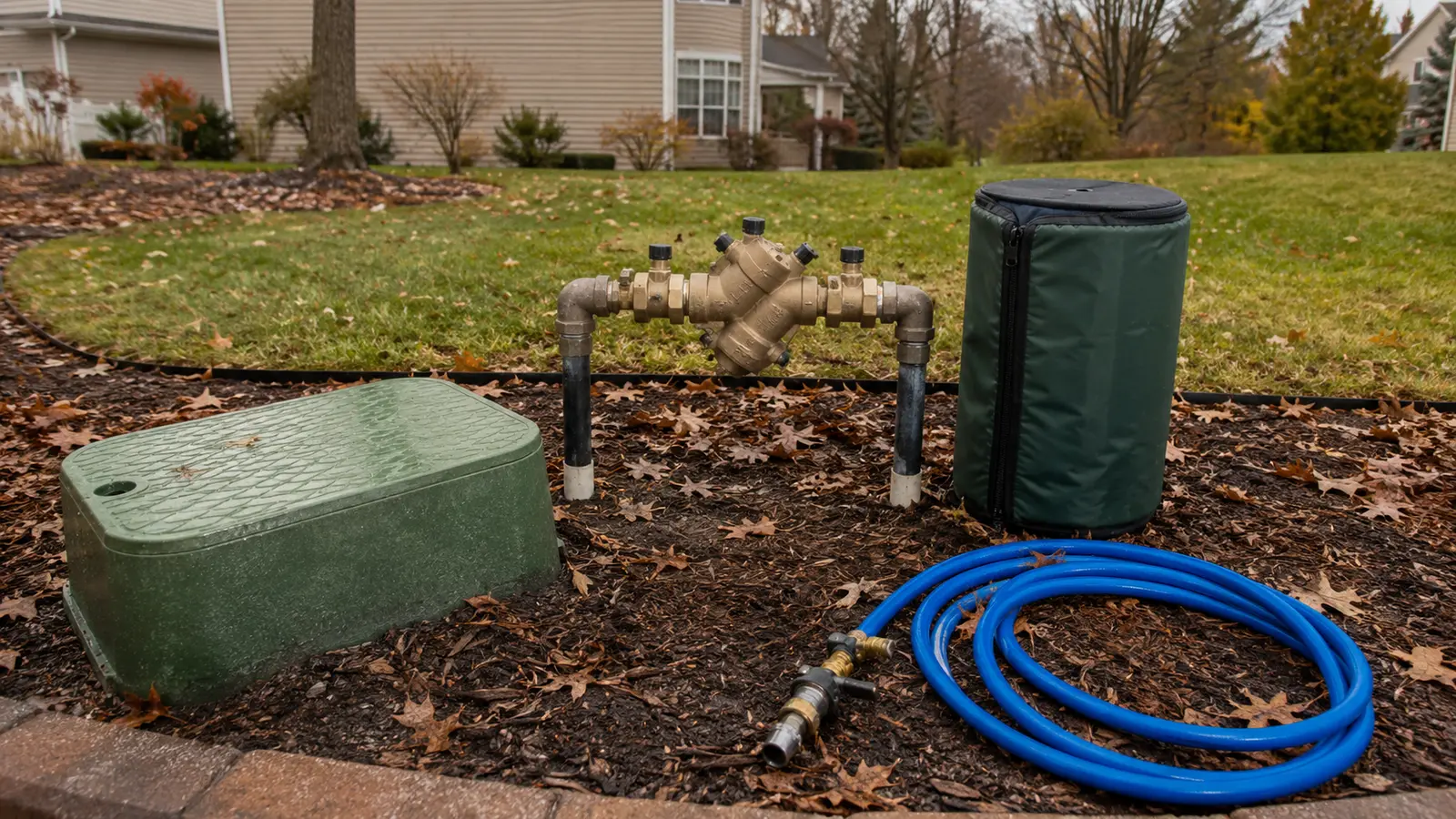
Match the pattern before opening anything
| Possible cause | Best clue | First check |
|---|---|---|
| Exposed water-filled hardware | Backflow or pipe sits above grade | Move the deadline earlier than for buried laterals |
| Unknown drainage design | No reliable record of blowout or low-point drains | Have the system identified before the first freeze window |
| Slow-draining low points | Property has grade changes or mixed pipe depths | Do not assume the controller OFF setting removed water |
| Late-season watering need | Warm soil and dry landscape still need irrigation | Balance plant need with a service buffer before freeze risk |
Read the system before replacing a part
Use the observation that most closely matches your yard. Each row changes the next test, so you do not spend an afternoon proving the wrong theory.
What it meansThey cool faster than buried laterals and deserve the earliest protection.
Do nextSchedule service before the first credible freeze window and follow device-specific guidance.
What it meansRisk may be lower for buried pipe but is not zero for exposed trapped water.
Do nextProtect exposed components and avoid relying on a universal temperature guarantee.
What it meansTrapped water has more time to freeze throughout vulnerable cavities.
Do nextComplete the documented winterization method before the event.
What it meansYou cannot confirm that turning off water will empty every low point.
Do nextIdentify the design or book professional service while time remains.
Four tests that narrow the fault
Stop as soon as one result gives you a clear boundary. The goal is not to perform every test; it is to eliminate whole groups of causes safely.
- 01
Inventory exposed water-filled parts
Walk from the irrigation shutoff through backflow, filter, pump, manifolds, and above-ground transitions.
IF YES / NORMALEvery vulnerable component has a documented protection step.
IF NO / ABNORMALThe unknown component—not the forecast date—sets the need for help.
- 02
Use a rolling forecast window
Check nightly low, duration below freezing, wind exposure, and warning type for the next 7–10 days.
IF YES / NORMALThe work is complete before the first credible risk period.
IF NO / ABNORMALA last-day appointment leaves no buffer for weather or contractor availability.
- 03
Confirm the installed removal method
Find labeled manual drains, documented automatic drains, or a dedicated professional blowout connection.
IF YES / NORMALThe method matches system design.
IF NO / ABNORMALDo not improvise a compressor connection or assume gravity reaches every low point.
- 04
Create a spring handoff record
Photograph control positions and note date, method, exceptions, and contractor details.
IF YES / NORMALSpring startup can reverse known steps safely.
IF NO / ABNORMALUnlabeled positions invite forced handles and missed drains.
Numbers worth measuring
Forecast temperature alone cannot express the thermal behavior of every component.
Common fixes that waste time
The vulnerable event may occur before service is available.
It changes commands, not water volume in the plumbing.
Freeze timing and installed hardware vary sharply across U.S. climates and properties.
How the evidence changes the repair
A homeowner planned to wait until lawn growth stopped, but the backflow assembly stood exposed beside a windy wall.
- The 10-day forecast showed one prolonged subfreezing night.
- The buried zones still served dry fall turf.
- A service appointment was available four days before the event.
The exposed component and service buffer—not grass dormancy—set the deadline. The system was winterized before the risk window while one final watering occurred earlier in the week.
How to confirm the repair actually held
A single successful start can hide an intermittent splice, sticky valve, remaining leak, or scheduling problem. Recreate the original conditions before calling the job finished.
Pass: Each has a documented protected state.
If not: The winterization is incomplete.
Pass: Covers, insulation, and drained positions remain undisturbed.
If not: Restore protection before the next colder event.
Pass: Every moved control has a known return state.
If not: Get system-specific guidance before forcing a valve.
Check these in order
- 01
Find the first vulnerable component
List exposed backflow hardware, above-ground pipe, pumps, filters, hose timers, and shallow valve boxes. The most exposed water-filled part sets the practical deadline.
- 02
Read the forecast as duration and exposure
Record forecast low, hours below freezing, wind exposure, and whether the component is above or below ground. Do not reduce the decision to one magic temperature.
- 03
Identify the removal method
Automatic drain, manual gravity drain, and compressed-air blowout are different designs. Choose only the method supported by the installed system and manufacturer or installer guidance.
- 04
Build in service lead time
If professional blowout is appropriate, schedule before the first likely freeze window rather than on the final warm afternoon, when contractors may already be booked.
- 05
Record the finished state
Photograph shutoff, drain, backflow, and controller positions, and note the date and method. That record prevents guesswork at spring startup.
- You cannot identify the system's drain or blowout design.
- The backflow assembly requires a licensed tester or local code controls who may service it.
- A pump, well, or shared water supply changes the shutdown sequence.
What homeowners ask about this symptom
At what temperature do sprinkler systems freeze?
Water freezes near 32°F, but damage risk depends on exposure, duration, wind, pipe depth, insulation, and whether water is trapped. No single outdoor reading guarantees a particular component is safe.
Is turning the controller off enough for winter?
No. OFF stops electrical watering commands; it does not remove water from pipes, valves, filters, pumps, or backflow hardware.
Sources and review notes
General maintenance logic is checked against EPA WaterSense outdoor irrigation guidance. Product controls and disassembly steps vary by model; use the current manufacturer manual for your exact valve, controller, or sprinkler head.
Published and last reviewed: August 30, 2026